Dear Cindy,
I know this isn't a writing question, but I hope you'll consider it, anyway. No offense, but you're not what I'd call famous. Your grandfather kind of was, though. Well, among history buffs. Among Canadian history buffs, I should say. Well, among followers of People Who Live Forever. I'd heard of him, anyway!
Wasn't he the guy who went tandem skydiving for the first time at the age of 100? Wasn't he the last surviving veteran of The Great War in British Columbia when he died? You used to have a story about him on some website, but I can't find it anymore. Why not?
Curious in Canada
Dear Slightly Rude Canuck,
You're quite right, when my grandfather was alive, he had his own page on my website. After he passed away, I kept the page but didn't link to it. I thought I could just direct interested parties there. I wound up receiving more requests than I expected, so on what would have been his 110th birthday (August 18, 2009), I posted his story on my former group blog. That blog has since shut down. That's why you can't find the page.
Thinking about it, his story does connect to writing. He had a can-do attitude, which is very necessary for writers—published or unpublished—and which is why I list him on my Bio page as one of my heroes. Thanks to you, I'm now posting that former group blog article here. So, you see, S.R.C., rudeness sometimes pays off (don't think I didn't notice that ditty about me not being famous). Who said Canadians are always polite? S.R.C., it's people like you who live to break stereotypes. For that, I commend you.
Here's the post:
You're Never Too Old...
To follow your dreams.
Repeat after me: You're never too old to follow your dreams! If someone scoffs at you, turn a deaf ear. If you hit a brick wall, dust yourself off and try again. Persevere! Works for me.
Today is a very special day for me. It's the birthday of one of my heroes, my grandfather, William "Duke" Procter. The Duke is in quotation marks, because it's a nickname. The story goes that when he was a toddler he strutted around like the Duke of Wellington, so his father tagged him "Duke," and Duke he remained until the day he died, December 14, 2005.
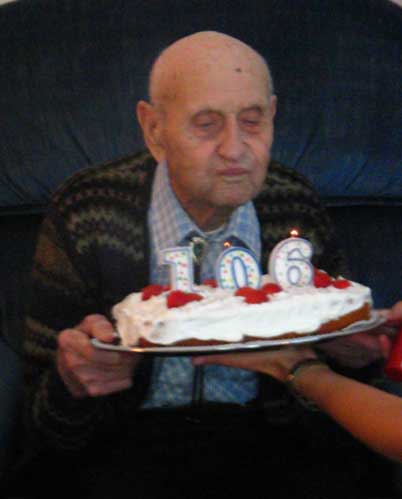 If Duke were still alive, he would be 110 years old today. Which sounds unbelievable until you consider that he didn't die until he was nearly 106.5 (after 100, those halves become important again). Okay, so the years after 105 are all downhill. At least they were for Duke ("Grampa" to me). To be honest, the years after 103 aren't a cake walk, either. Neither are the years after 95. But when you're determined and you're blessed with good health and you truly and honestly believe that you can do anything you set your mind to...well, you pretty much can. If Duke were still alive, he would be 110 years old today. Which sounds unbelievable until you consider that he didn't die until he was nearly 106.5 (after 100, those halves become important again). Okay, so the years after 105 are all downhill. At least they were for Duke ("Grampa" to me). To be honest, the years after 103 aren't a cake walk, either. Neither are the years after 95. But when you're determined and you're blessed with good health and you truly and honestly believe that you can do anything you set your mind to...well, you pretty much can.
When I want to say, "I can't," I think of Duke.
You see, he didn't just live to a ripe, old age in remarkably good health (unless you count the prostate cancer, but when you're diagnosed in your mid-nineties, the odds are pretty good it ain't the cancer that will kill you). He lived life with a vengeance. He embraced it wholeheartedly. When he died, he was one of the last three Canadian veterans of The Great War (as in WW I) and the last surviving veteran of that war in my province. Probably the only reason he survived the war was because, by God's grace and not Duke's choice, he didn't fight. He enlisted at 16, trained hard, and traveled to England with the rest of his battalion. While they waited to go to France, where most of his battalion would eventually die during the Battle of Vimy Ridge, it was discovered that not only was Duke underage but he knew how to fell trees. They needed men (boys) like him to log in Scotland for wood for the trenches.
Duke did not want 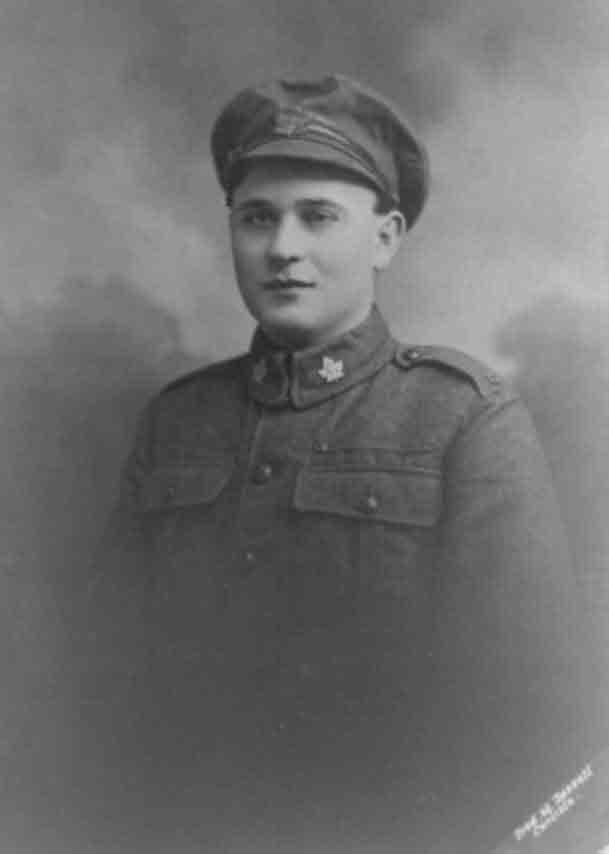 to go to Scotland. He signed up for the war because he was sick of logging and farming. He wanted adventure, he wanted to see the world. He wanted to fight. The irony is that if he had been sent to France, he likely would have died at Vimy Ridge. Instead, he lived for the boys who fought when he was told he couldn't. He lived for his friends who died. to go to Scotland. He signed up for the war because he was sick of logging and farming. He wanted adventure, he wanted to see the world. He wanted to fight. The irony is that if he had been sent to France, he likely would have died at Vimy Ridge. Instead, he lived for the boys who fought when he was told he couldn't. He lived for his friends who died.
When I was about 10 or so, I learned Grampa was born in 1899. I remember having a conversation with him where I challenged him to live until at least 2000 so he could set foot in three centuries. Not many people get that chance. He laughed, but as he aged I realized, "Dang, he just might do it."
Years later, I learned that the 21st century didn't technically start until 2001, which, gulp, tacked on another year for Grampa, or he would lose my challenge. Silly me.
Here was a man who took up horseshoes (seriously, not just as a thrice-a-summer affair) at the age of 75. He eventually became the oldest competing horseshoe player in Canada, as in playing in tournaments...somewhere around age 97 or 98. He built a horseshoe pit in his front yard and played every day, alone or with others (if they dared challenge him) until 105. When my grandmother was alive, they squaredanced. She died a month shy of her 89th birthday, but Duke wasn't ready to give up his dance shoes. He loved to dance. He continued squaredancing until he was 103. He was very popular, too. There were a lot of widows at those dances. They needed partners. Duke was happy to oblige. Every single week.
Duke learned to bowl (five-pin bowling, which apparently only exists in the Great White North—the balls are smaller and don't have finger holes) at 92. Ninety-two! My grandmother had died, and he needed more to do, you see. So he took up bowling, played in two leagues a week, and earned his last strike at 104. Not bad for a newbie.
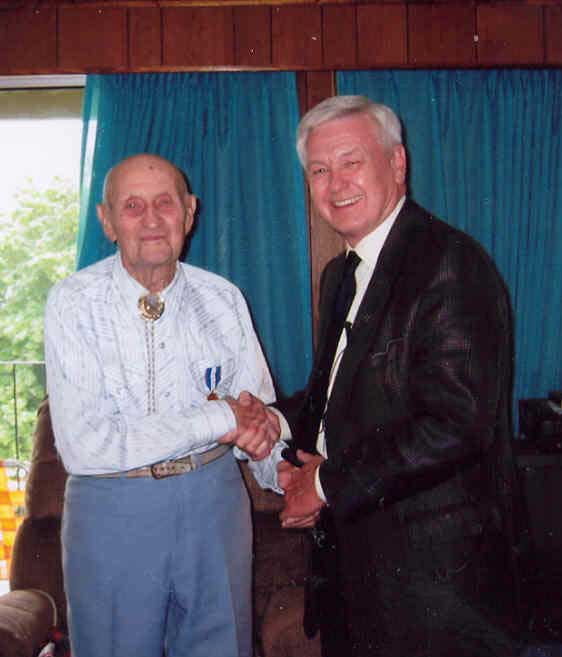 He drove until 101, put in a huge garden every year, and canned his own fruit, which he ate everyday, until past age 100. He's been the subject of more than one documentary, and had a song written about him (Over 100 Years on the CD SMALL TOWN VAN GOGH by Dale Boyle). He lived in his own home until 105, when a bad fall put him into an old folks' home. He'd had a bad fall at 103, during a trip to Vancouver to receive the Queens Jubilee Medal for his service in The Great War. He spent his time in the hospital instead. That was it, we thought. He wouldn't recover. But he rallied and returned home, receiving his award via a personal visit from a Canadian senator several weeks later. He was proficient in survival, you see. After all, he had brain surgery in his sixties after a tree fell on his head. I'm not making this stuff up! He changed his winter tires himself in his nineties when a phone call to the tire shop revealed it would take too long to have it done for him. He had things to do! He had to go vote (we were having a federal election). He didn't have time to waste sitting in a tire store. He drove until 101, put in a huge garden every year, and canned his own fruit, which he ate everyday, until past age 100. He's been the subject of more than one documentary, and had a song written about him (Over 100 Years on the CD SMALL TOWN VAN GOGH by Dale Boyle). He lived in his own home until 105, when a bad fall put him into an old folks' home. He'd had a bad fall at 103, during a trip to Vancouver to receive the Queens Jubilee Medal for his service in The Great War. He spent his time in the hospital instead. That was it, we thought. He wouldn't recover. But he rallied and returned home, receiving his award via a personal visit from a Canadian senator several weeks later. He was proficient in survival, you see. After all, he had brain surgery in his sixties after a tree fell on his head. I'm not making this stuff up! He changed his winter tires himself in his nineties when a phone call to the tire shop revealed it would take too long to have it done for him. He had things to do! He had to go vote (we were having a federal election). He didn't have time to waste sitting in a tire store.
It just didn't occur to him not to believe in himself. Which was why, when my cousin took skydiving lessons and then suggested to Grampa that he should go tandem skydiving for his 100th birthday, by golly, he took her up on it. (Tandem skydiving is when you're strapped to the instructor, who pulls the cord).
Grampa wasn't feeling well around his 100th birthday, however. Certain medications for his prostate cancer and other considerations were taking their toll. We held a massive (and I mean massive) squaredance for his 100th birthday, and he wobbled on his feet as he walked to his seat of honor on the stage (oddly, he danced easily enough). We feared this birthday would be his last.
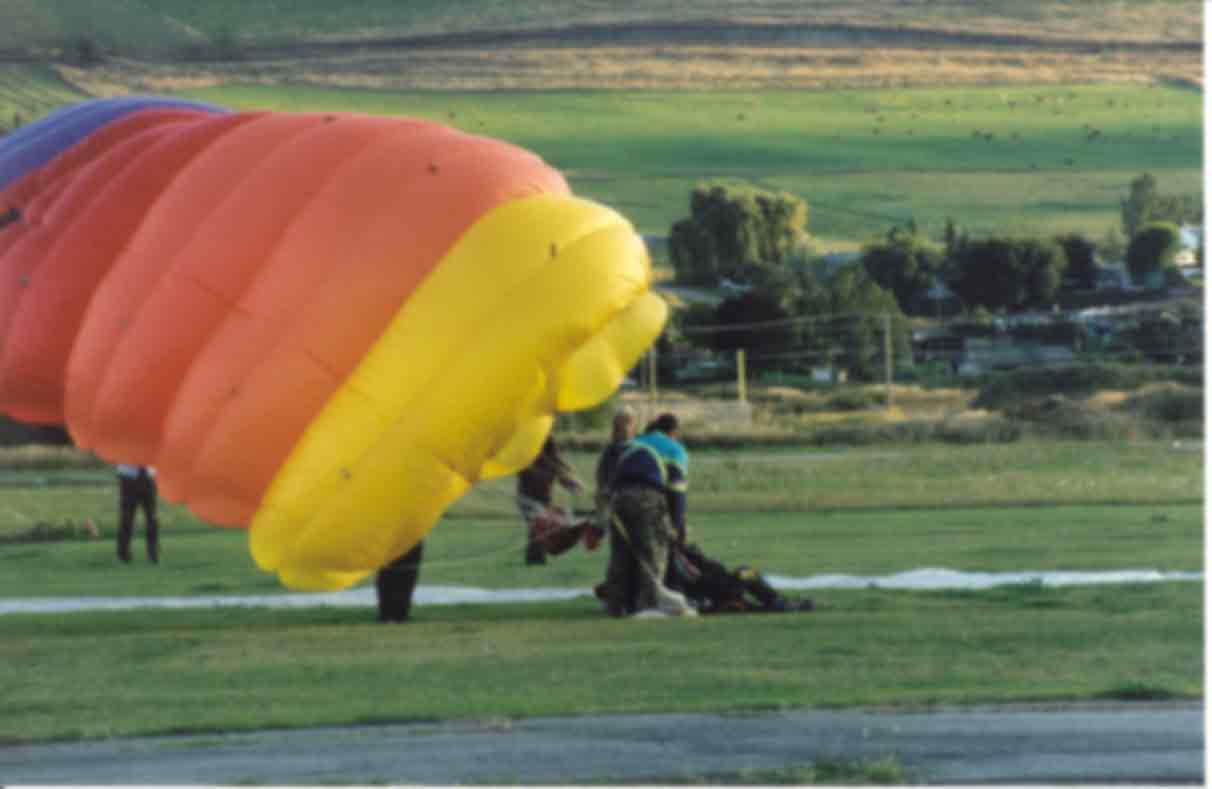
A little over a month later, at the age of 100 years and 40 days on September 27, 1999, permission from his doctor in hand, he went tandem skydiving, all right.
Here's his landing:
And here he is celebrating with the dive team after the dive:
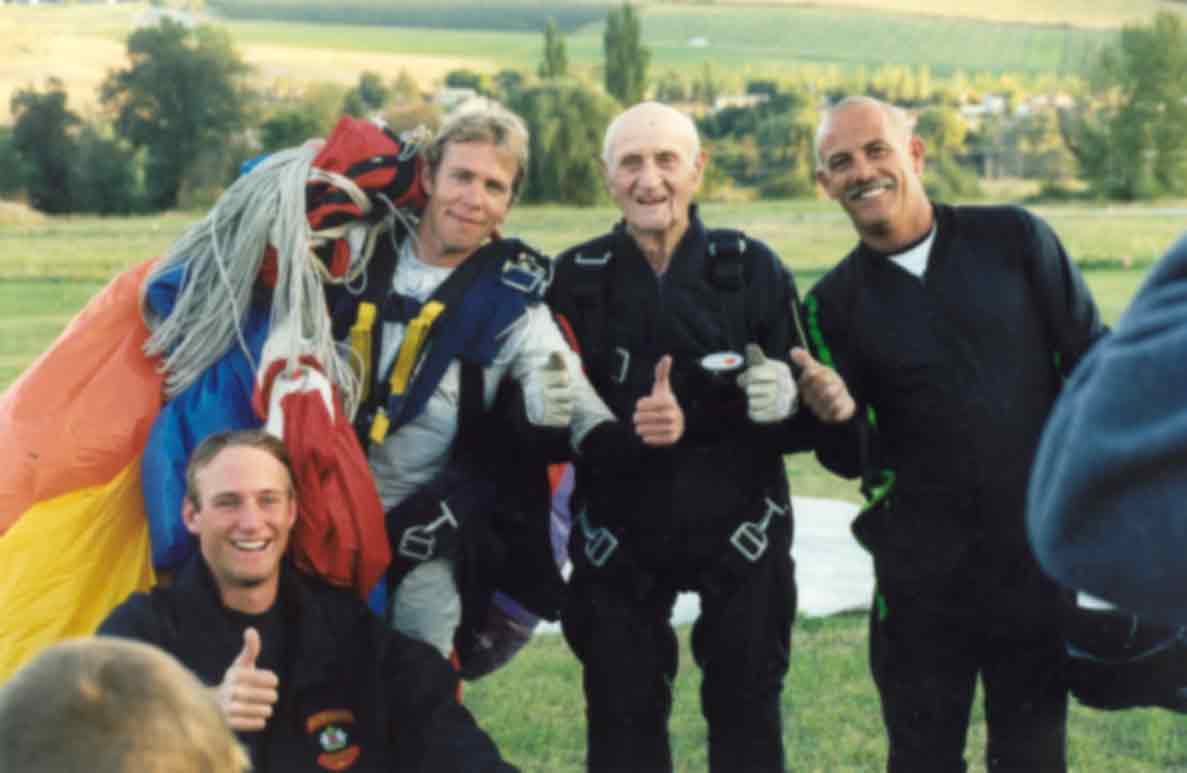
Note, he's standing on his own two feet (he's the bald guy in the middle).
Grampa became somewhat of a Canadian celebrity for a bit there following this skydive. As he aged, he'd get telephone interviews for newspaper and magazine articles (he appeared in Canadian Living, our equivalent of something like Family Circle or Good Housekeeping), and McLeans (our equivalent of Times or Newsweek). I was visiting him during one such newspaper interview. The guy was old, around 103, and, okay, sometimes his memory was foggy. The interviewers were always interested in the skydive. This one asked Grampa if he broke his leg during the landing. I was a few feet away. I heard Grampa try to explain that he landed okay, but the interviewer confused Grampa's story about breaking his leg a good ten years earlier when he fell off his roof while cleaning the gutters (again, not making this stuff up!) with him breaking his leg during the landing following his skydive.
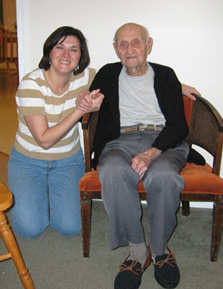 Let me set the record straight: he broke his leg falling off the damn roof in his 90s, not skydiving at 100! Let me set the record straight: he broke his leg falling off the damn roof in his 90s, not skydiving at 100!
There, I feel better now.
Well, I've rambled. Which isn't unusual. I inherited it from Duke. But I still smile, I still get a tear in my eye, I still feel my heart swell with love and pride when I think of him. And whenever I feel down, whenever I feel like I just can't go on, that following my dreams is too hard, that I keep hitting brick wall after brick wall and it's not worth it, I can't do it, I think of my grandfather. And I know that I CAN.
Duke finally died of old age and a series of small strokes at 106, several weeks after hip surgery as a result of a fall in his room in the middle of the night at the old folks home. His heart continued beating a good ten minutes after he stopped breathing.
Now, go forth and follow your dreams!
©Cindy Procter-King, August 2009
Top
Books |